Under the dual pressures of intensifying market competition and rising production complexity, achieving extreme collaboration among efficiency, cost, and delivery has become a "must‑answer question" for iron and steel enterprises.However, restricted by data silos and process "black boxes", traditional management and control models often limit operational optimization to "post‑event statistics" and "empirical firefighting", making it difficult to cope with complex and volatile production challenges.
How to break through? Build capabilities for "simulation, deduction, and optimization" of the full‑domain operation status.
Through the deep integration of "AI + Digital Twin", we no longer only "map" the production line status, but also "deduce" future scenarios using high‑fidelity models and "calculate" optimal strategies with AI algorithms.This is not only a technological upgrade but also a reshaping of the management model — driving enterprises to shift from "passive response" to "proactive prediction and systematic regulation", equipping lean operations with a truly thinking "intelligent engine".
01 Overall Approach: Building an Intelligent Closed Loop of "Simulation – Deduction – Decision"
Targeting pain points such as black‑box processes, multi‑variable coupling, and difficult decision verification in iron and steel production, we build an enterprise intelligent digital base focusing on "high‑fidelity simulation, dynamic deduction, and overall optimization":
Panoramic Simulation: Not only geometric mapping of physical entities, but also restoration of the dynamic operation logic of production, energy, and logistics through mechanism models.
Deduction & Analysis: Based on historical and real‑time data, AI algorithms are used to preview future states in advance and identify potential bottlenecks and risks.
Optimized Decision‑Making: A "multi‑objective optimization" model is built to output scheduling and control strategies, forming an operation mechanism of "simulation verification – decision issuance – closed‑loop feedback".
02 Four Core Scenarios Unlocking a New Lean Paradigm
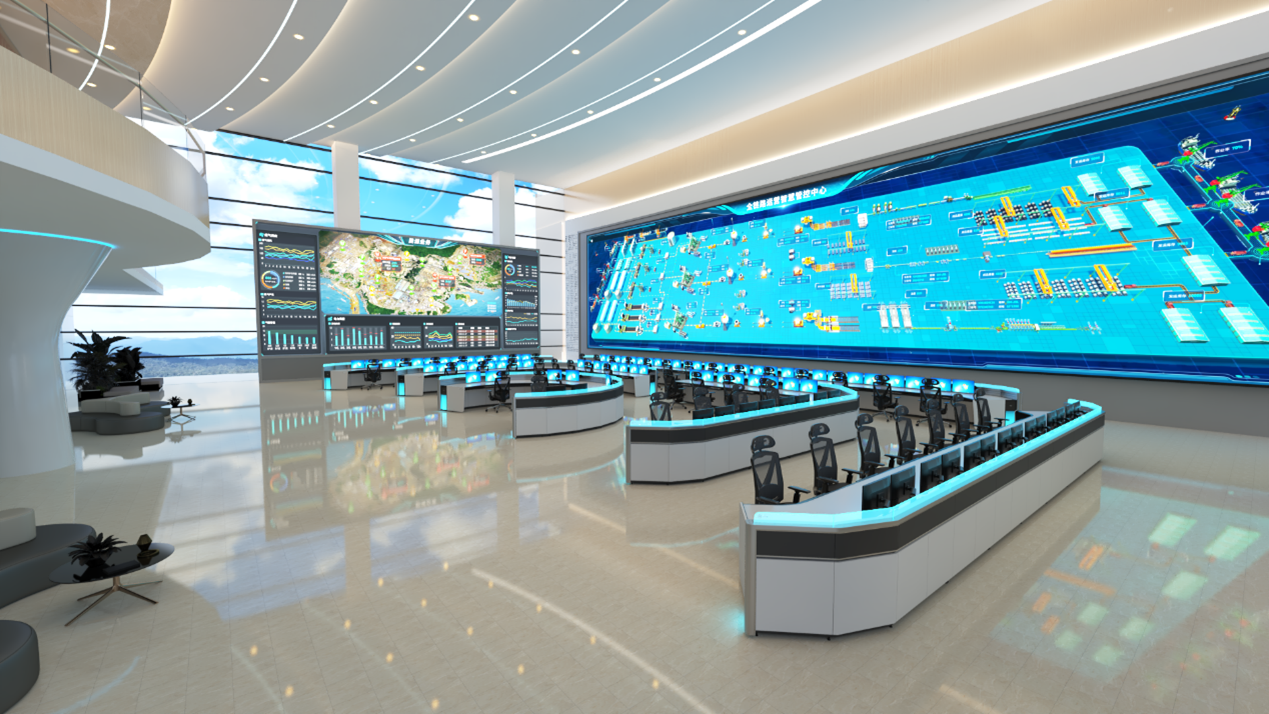
(1)Scenario 1: Operational Command Center — From "Static Reports" to "Business Sandbox"
Pain Point:Lagging operational indicators, inability to quantify the impact of emergencies (e.g., equipment abnormalities, inventory) on overall costs and delivery.
Solution:Build an "enterprise business sandbox" based on digital twin. Integrate full‑process and full‑business data, and conduct dynamic deduction using time‑series prediction and causal analysis models. Simulate operational results under different scheduling schemes and support "What‑if" hypothetical analysis.
AI Empowerment:Through multi‑dimensional attribution and scenario deduction, generate "abnormal root cause – future trend – adjustment plan" to support forward‑looking decision‑making.
Actual Effect:Shift from "post‑event review" to "pre‑event rehearsal". Cross‑process decision response time reduced from hours to minutes, significantly improving operational resilience.
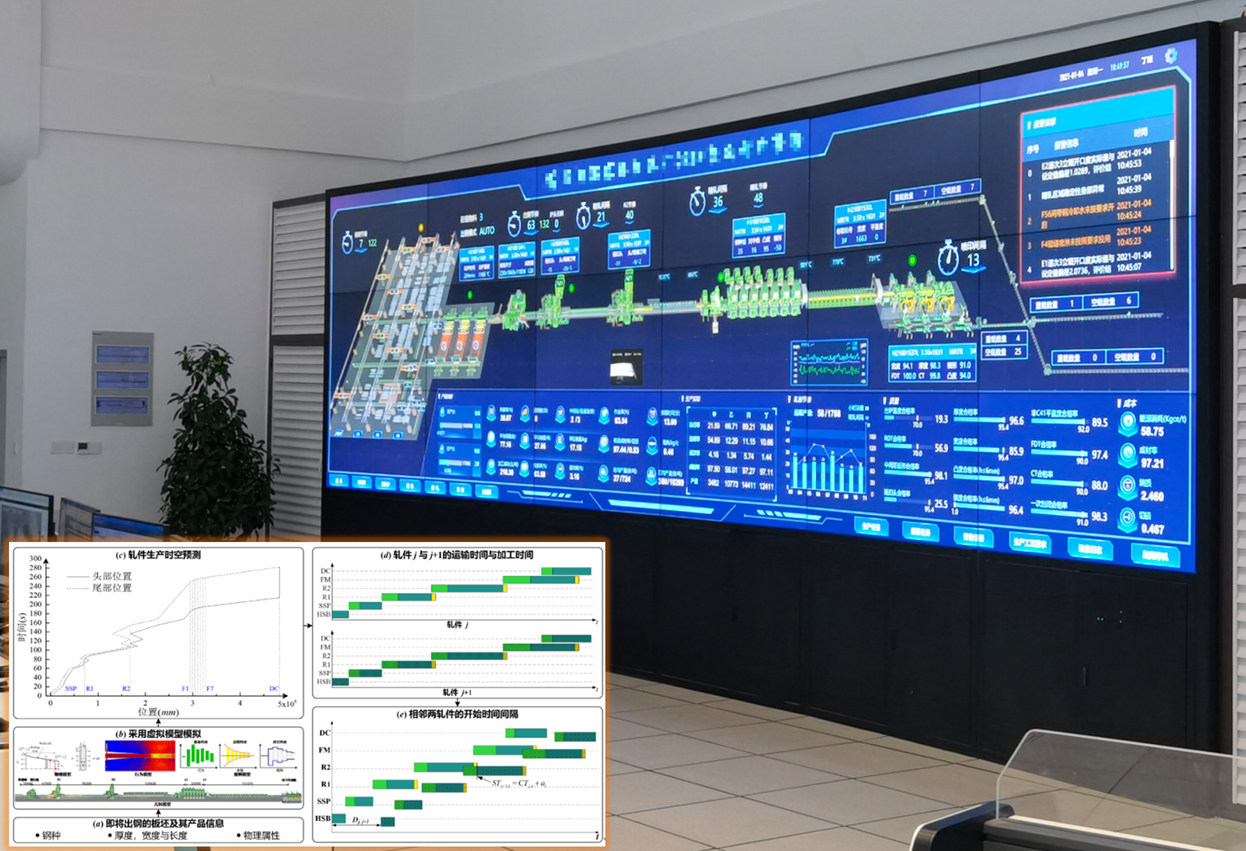
(2)Scenario 2: Lean Management & Control of Production Processes — From "Local Scheduling" to "Overall Operations Research"
Pain Point:Process coordination relies on experience, making it difficult to accurately assess efficiency bottlenecks, and scheduling instructions lack Overall optimality.
Solution:Build a full‑process material flow simulation model to map and predict material flow status in real time. Combined with operations research optimization algorithms and reinforcement learning, intelligently identify process bottlenecks and rhythm deviations, and dynamically calculate the optimal process connection scheme.
AI Empowerment:Through bottleneck simulation and intelligent scheduling, real‑time early warning of rhythm breaks, generating "optimal scheduling instructions" and "rhythm recovery strategies".
Actual Effect:Abnormal response is advanced to realize "predictive scheduling". Production efficiency fluctuations are significantly reduced, and process control evolves from experience‑driven to model‑driven.
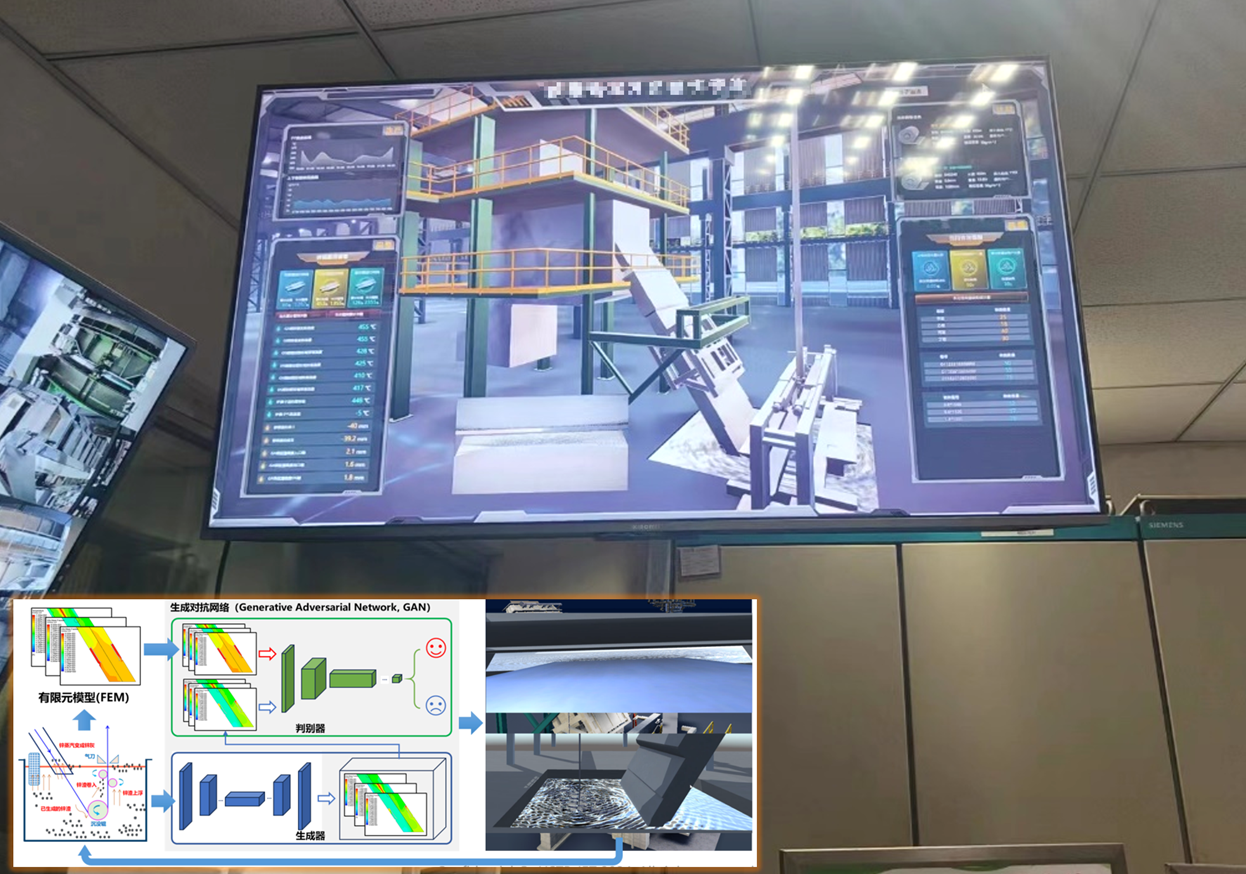
(3)Scenario 3: Online Optimization of Core Processes — From "Black‑Box Trial and Error" to "Transparent Intelligent Control"
Pain Point:Strong nonlinearity in smelting and processing, invisible internal states, parameter adjustment relying on manual trial and error, and large quality fluctuations.
Solution:Adopt "mechanism + AI" integrated modeling. Process simulation data is used to train AI agent models, which invert micro‑states such as temperature and flow fields in real time, making key processes "transparent".
AI Empowerment:Through virtual measurement and parameter optimization, build a closed loop of "perception – mapping – prediction – optimization", automatically recommending optimal process parameters before anomalies occur.
Actual Effect:Process optimization no longer relies on "blind adjustment", realizing adaptive closed‑loop control of core parameters, significantly reducing process fluctuations and trial‑and‑error costs.
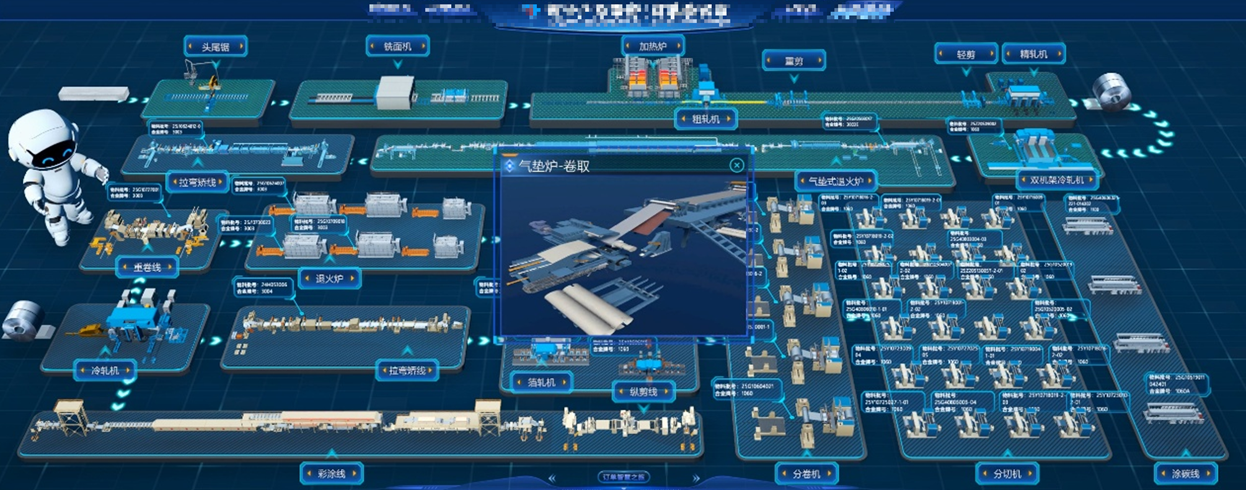
(4)Scenario 4: Intelligent Interaction & Large Model Application — From "Humans Looking for Data" to "Decision Support"
Pain Point:Expert experience solidified in documents, high thresholds for cross‑system data extraction and analysis, difficulty in quickly obtaining knowledge and data support at the decision site.
Solution:Deeply integrate enterprise private data (RAG technology) and large model capabilities to build a "decision wingman" that understands both business and data.
AI Empowerment:Intelligent Data Query: Break system barriers. Ask questions in natural language (e.g., "Analyze the cause of abnormal energy consumption last week"), and the model automatically invokes tools to capture data and generate charts.
Decision Support: Activate dormant knowledge bases, perform reasoning and analysis combined with current production status, and provide evidence‑based fault troubleshooting and optimization suggestions.
Actual Effect:Interaction mode upgraded to "natural conversation", shifting from simply "viewing data" to "asking for strategies", greatly improving the efficiency and accuracy of on‑site problem handling.
03 Implementation & Effect: Widespread Application & Verified Results
At present, the digital twin solution has been successfully implemented in multiple iron and steel and non‑ferrous enterprises In China and abroad.In the future, we will continue to promote the integration of "AI + Digital Twin", connect full‑process data, and precipitate unified data assets and knowledge bases for enterprises combined with production practices.By building a full‑link management and control mechanism of "risk identification – sandbox deduction – closed‑loop optimization – quantitative verification", we will drive enterprises to transform from "extensive empirical management" to "model‑based lean intelligent control", enhance the foresight of operational decisions, and inject strong digital and intelligent momentum into high‑quality enterprise development.


官方公众号


