Recently, Chinese President Xi Jinping met Indonesian President Prabowo Subianto in Shenzhen on the sidelines of the APEC Economic Leaders' Meeting. The two leaders announced the launch of negotiations on a China–Indonesia Comprehensive Economic Partnership Agreement (CEPA). Xi called for expanding mutually beneficial cooperation and deepening collaboration in energy and mineral resources, artificial intelligence, the digital economy and clean energy.
Indonesia has the world's largest nickel reserves and output, and nickel is a key input for stainless steel and EV batteries. Along the country's nickel and stainless steel corridor, a group of USTB alumni have been working on-site year after year, contributing to bilateral cooperation in resources and AI.
In this installment of "Innovating the Future: The Strength of USTB," we look at four Indonesian sites where USTB's smart manufacturing is supporting major projects along the Belt and Road, turning research into hard, on-the-ground results.
I. Tsingshan Industrial Park: A 120 km² Digital Twin
Construction of the Indonesia Morowali Industrial Park (IMIP), also known as the Tsingshan Industrial Park, began in 2013. Drawing on local nickel resources, it has grown into an integrated steel base spanning mining, smelting, rolling and downstream processing. IMIP is an Indonesian national industrial park and bonded zone, a national overseas cooperation park jointly recognized by China's Ministry of Commerce and Ministry of Finance, and a China–Indonesia economic and trade cooperation zone whose agreement was signed in the presence of President Xi Jinping and then-President Susilo Bambang Yudhoyono.
The larger the park, the harder it is to coordinate. Mining, smelting, rolling and downstream processing are run by different companies, each with its own systems and data formats. Information silos had become a bottleneck to efficient collaboration and fine-grained management.
To break them down, the Institute of Engineering Technology,USTB (hereinafter "IET,USTB") joined hands with Tsingshan Holding Group Co., Ltd. to build a smart operations center. It models and renders a 120 km² site, integrates more than 300,000 heterogeneous data points from over 120 production lines across six business domains, and connects systems that once stood apart. Physical park and digital twin now appear on the same screen: equipment status and material locations are visible at a glance, giving strong support to cross-business collaboration and intelligent decision-making.
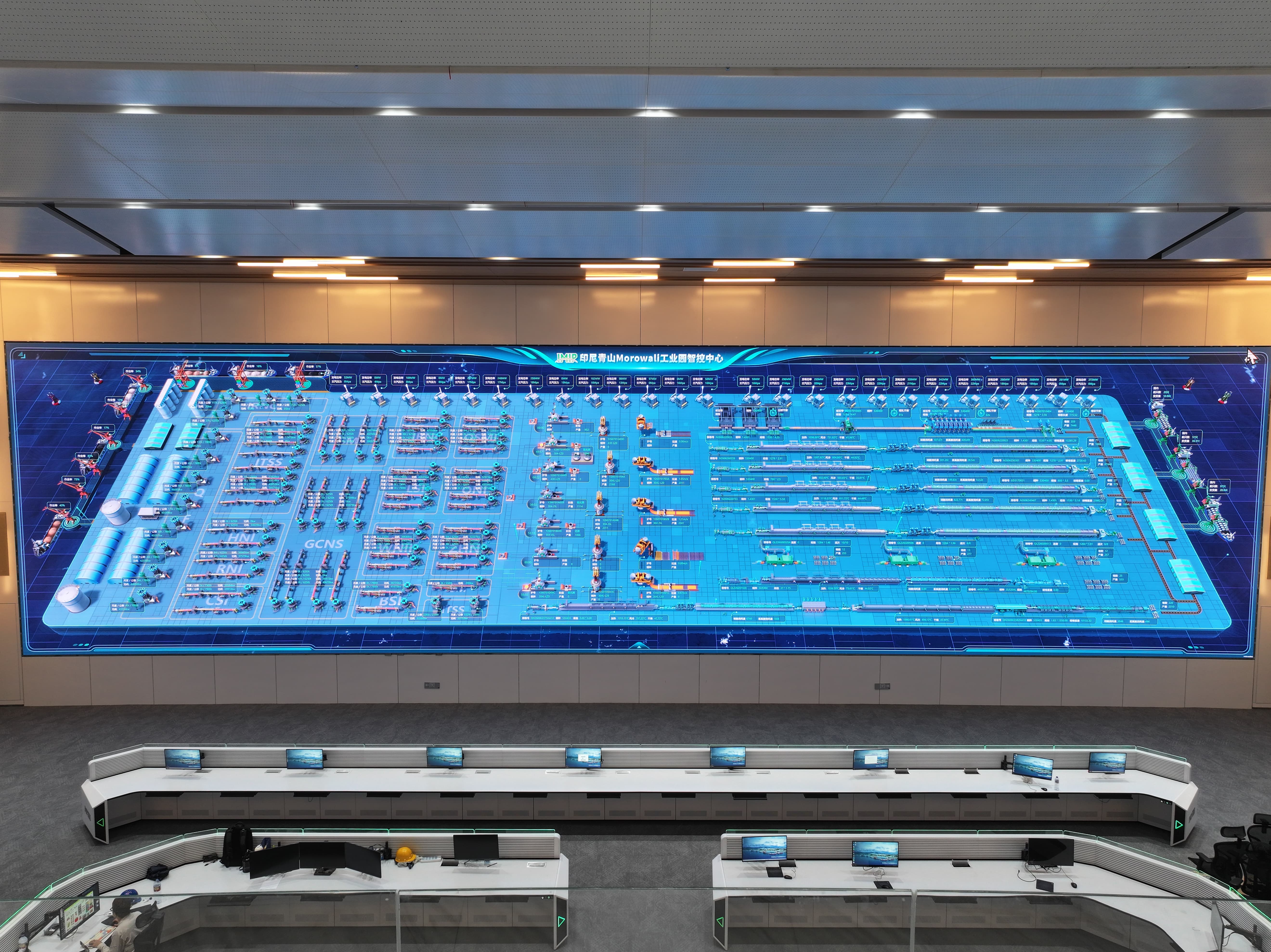
▲Smart operations center for a major Belt and Road metallurgical industrial park, built by IET,USTB
Going live was not the end. The team is now mining more value from the data and tightening end-to-end management, extending coverage so that one blueprint can be carried through to the finish.
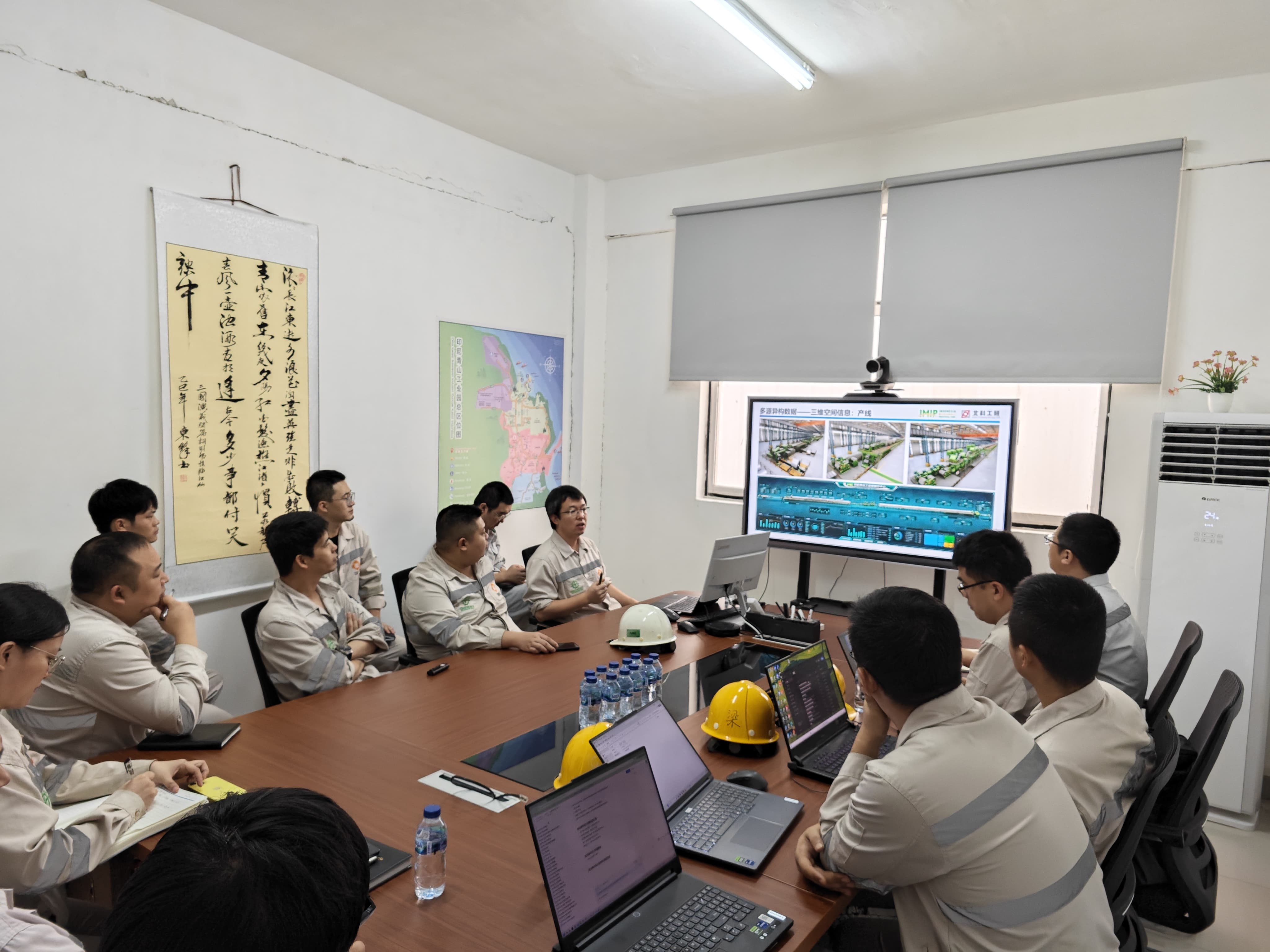
▲IMIP digital twin project: on-site implementation
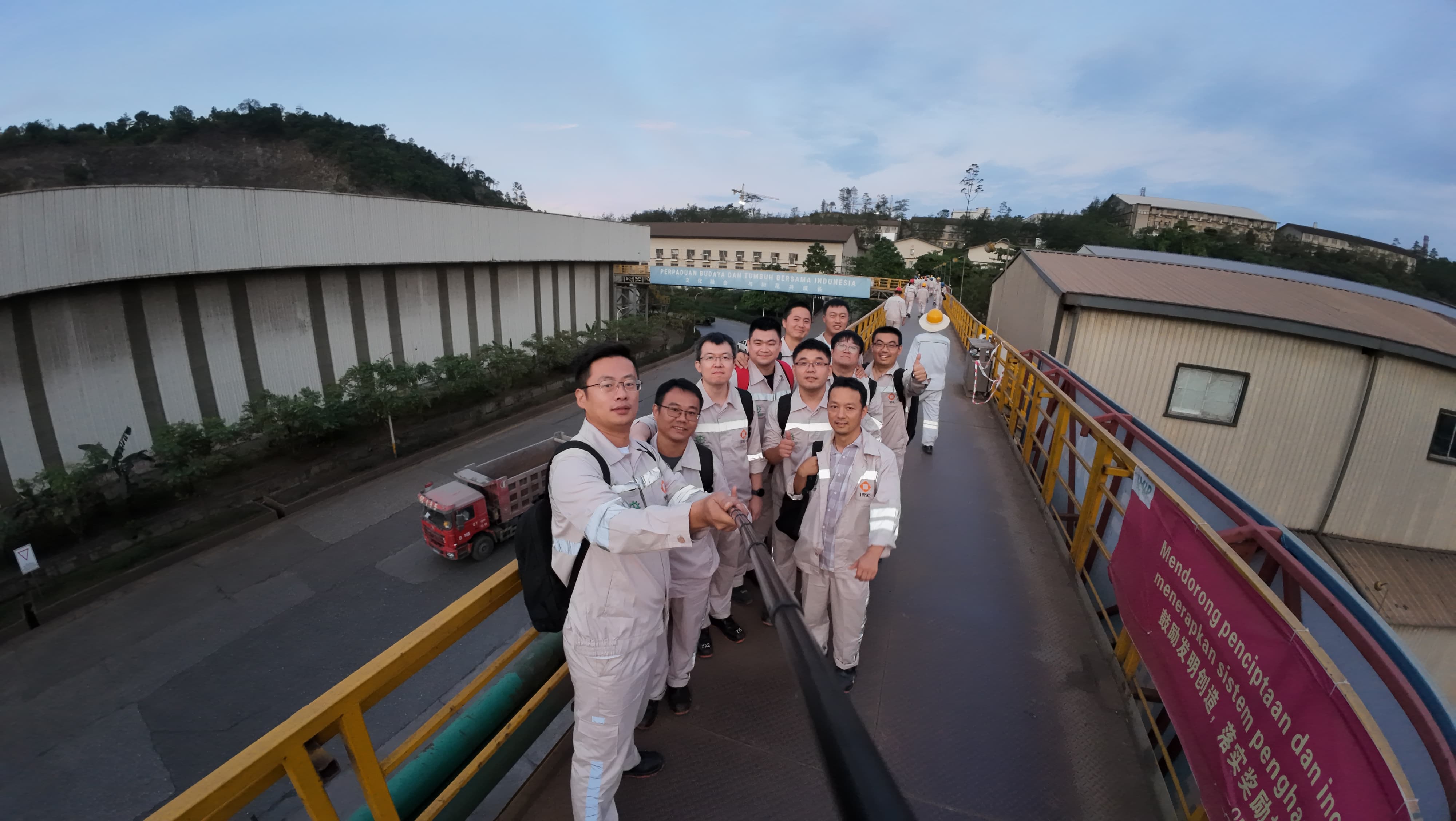
▲First team of IET,USTB engineers deployed to the IMIP digital twin project
II. Three Hot-Rolling Lines: Commissioning, Upgrading, Breaking Through
In the height of summer 2024, the electrical room of an Indonesian hot-rolling plant was stifling. Humidity hung in the air, mosquitoes circled the indicator lights on the cabinets, and work clothes were soaked through again and again. Dengue was rife around the park, yet IET,USTB commissioning engineers stayed in full protective gear in front of the screens, watching the rolling curves flicker nonstop. Once a billet enters the furnace, everything moves in seconds – there is no pause button in hot commissioning. Milestone by milestone, the team pulled the schedule forward and delivered ahead of time. It was a scene they had lived through many times over seven years.
In July 2017, the 1,780 mm stainless steel hot strip line of PT Indonesia Guang Ching Nickel and Stainless Steel Industry (GCNS) was commissioned. IET,USTB designed, supplied and commissioned its full automation system – the first time a homegrown system from the team ran a closed loop at an overseas industrial site. In June 2023, the team returned to the same line for a major upgrade of roughing short-stroke control (SSC), finishing speed looper and AGC, the coiling system and Level 2 models. The latest-generation systems lifted dimensional accuracy to a new level.
In July 2024, the 1,780 mm hot strip line of PT Guang Ching De Metal Rolling (GCDMR) was commissioned. IET,USTB integrated slab identification, surface inspection and basic and process automation into one system. The hard part was mixing stainless and carbon steel on the same mill: the two grades differ in deformation resistance and thermal schedule, yet thickness had to stay stable through every switch. The line achieved flexible rolling across the full 1.3–25 mm range, holding thickness deviation within ±25 μm from head to tail – less than half the diameter of a human hair.
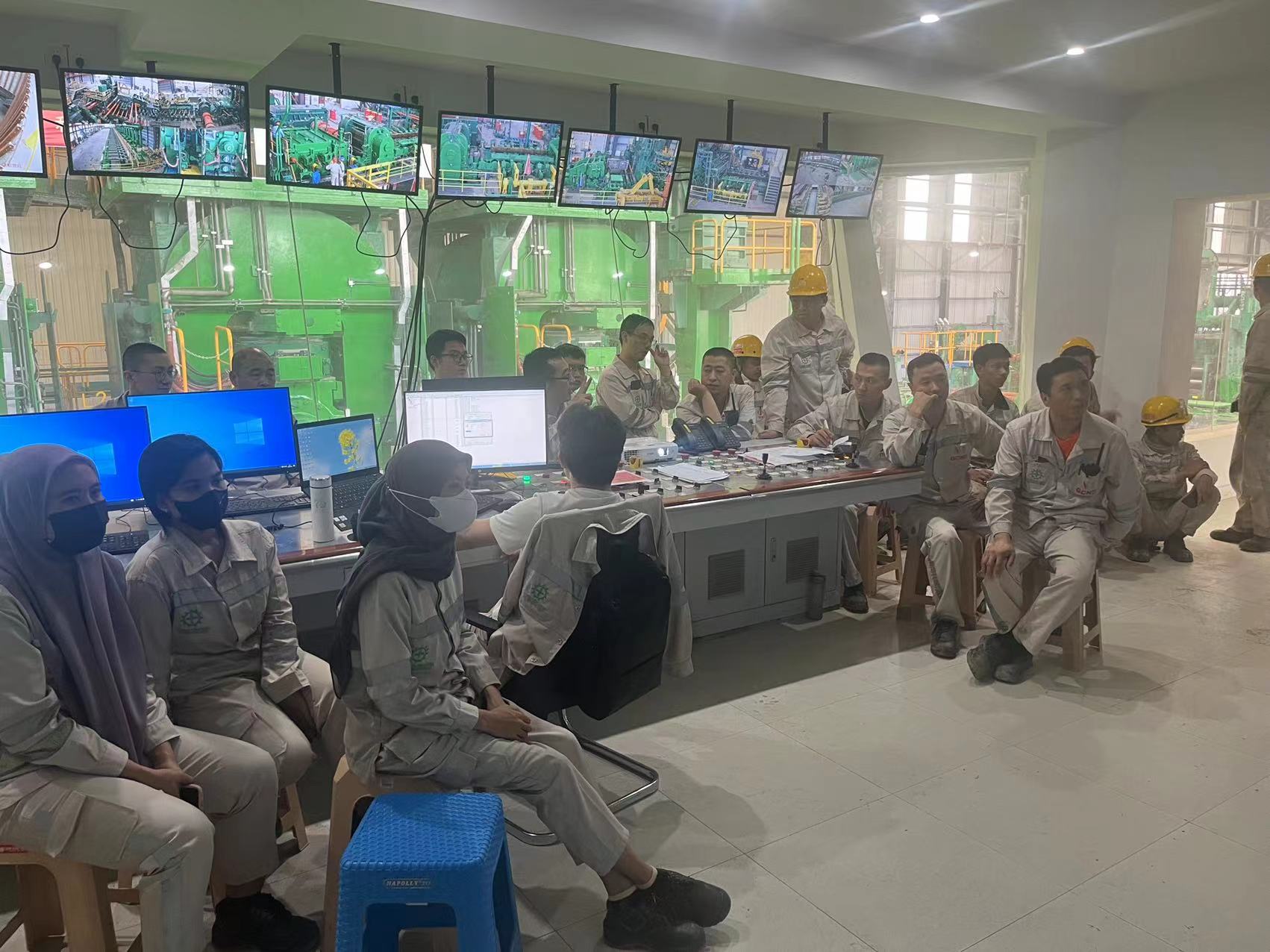
▲Commissioning of the GCDMR 1,780 mm hot strip line in Indonesia
In August that year, the 1,450 mm hot rolling project at Indonesia Ocean Special Steel Co., Ltd. entered hot commissioning. The walking-beam reheating furnace, roughing mill, flying shear, seven-stand four-high finishing mill, laminar cooling, coiler and pallet conveyor were brought online in sequence, with both Level 1 and Level 2 automation designed, supplied and commissioned by IET,USTB. Unlike cold commissioning, a hot test gives each stage only one chance. The team coordinated all parties and worked continuously to get it right first time. For an automation system, "first time right" is the toughest acceptance test: it checks not a function demo, but whether a homegrown solution can hold up at real production tempo.
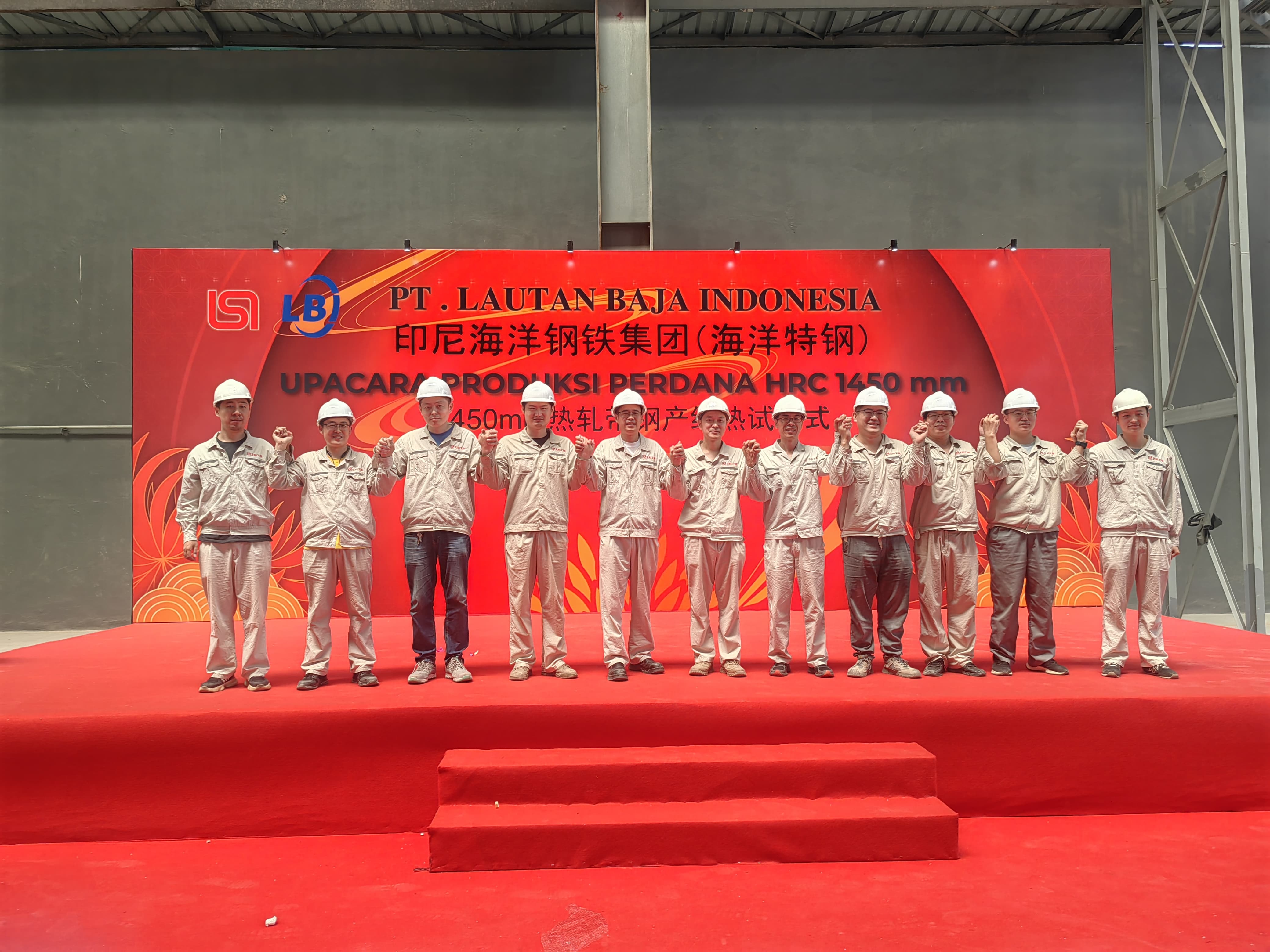
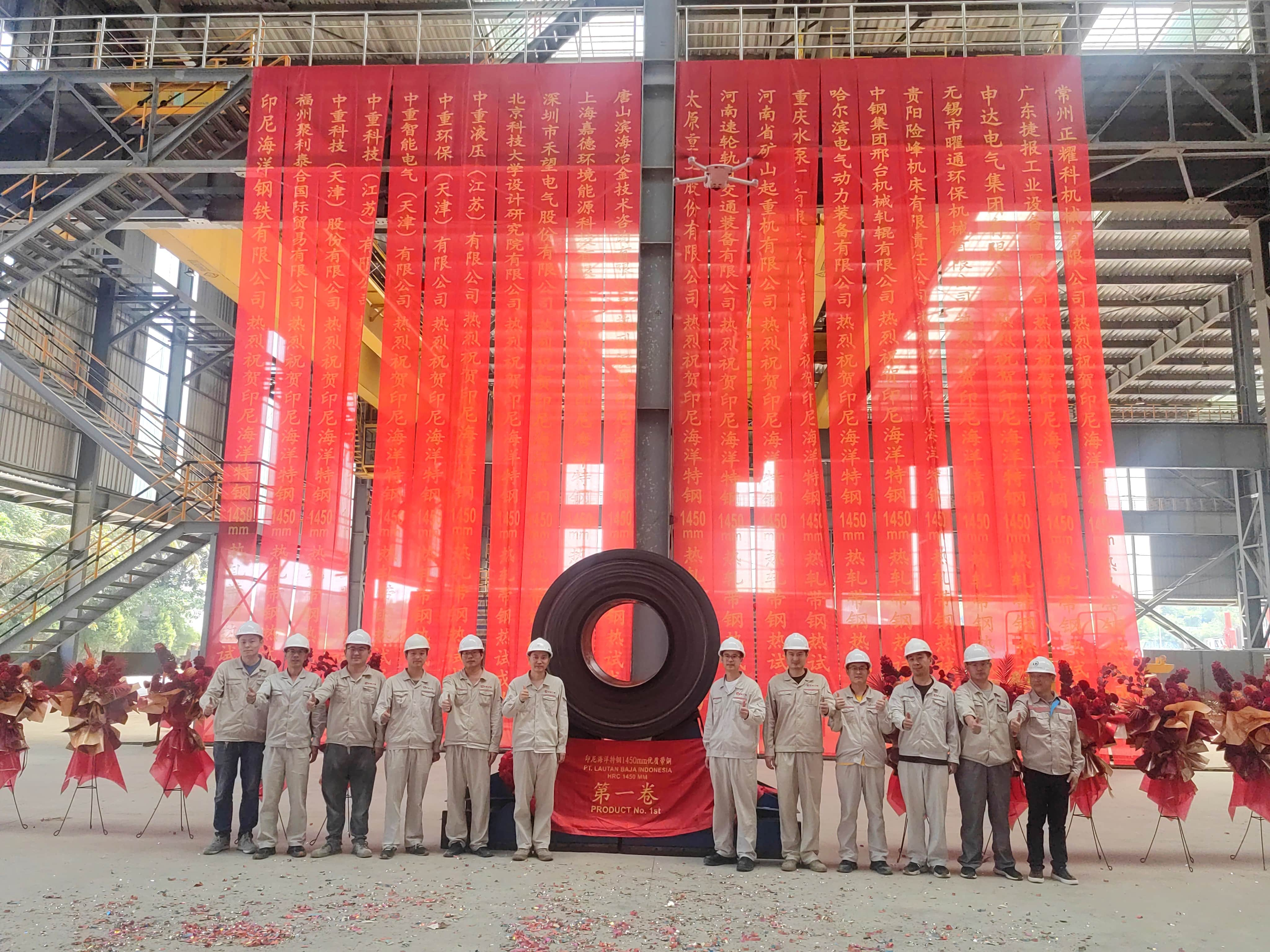
▲Hot commissioning and the first coil of the 1,450 mm hot rolling project at Indonesia Ocean Special Steel
III. PT Krakatau POSCO: An Online Swap for Strip Shape Control
In strip production, on-spec thickness is only the first step; strip shape is what really counts. Crown is the thickness difference between the center and edges of the strip cross-section; flatness describes whether the surface lies flat and stays free of waves. The two determine whether a product can enter high-end markets. For years, core control technologies for high-end hot strip lines remained in the hands of a few countries.
IET,USTB has spent years on this challenge, developing a multi-scale integrated roll-stack–rolled-piece model, versatile roll contours and a strip shape control system geared to high-end grades. The results are now used on more than 100 hot rolling lines in China and are expanding overseas.
The 1,850 mm project at PT Krakatau POSCO (PT KP) in Indonesia marked a major step for IET,USTB's homegrown strip shape technology into a world-class hot strip line abroad. The challenge was an "online swap": with the line running as usual, the IET,USTB system took over from the original SMS group system. It was the first time a complete Chinese strip shape control system had been exported to a high-end hot strip line of a global steel major. During the parallel run, the line rolled 1.38 mm ultra-thin strip in batches, with crown and flatness accuracy better than the original system and high-order wave defects effectively reduced.
That swap replaced more than a set of software. It traces the arc of Chinese metallurgical technology – from importing and absorbing know-how, to innovating independently and exporting engineered solutions.
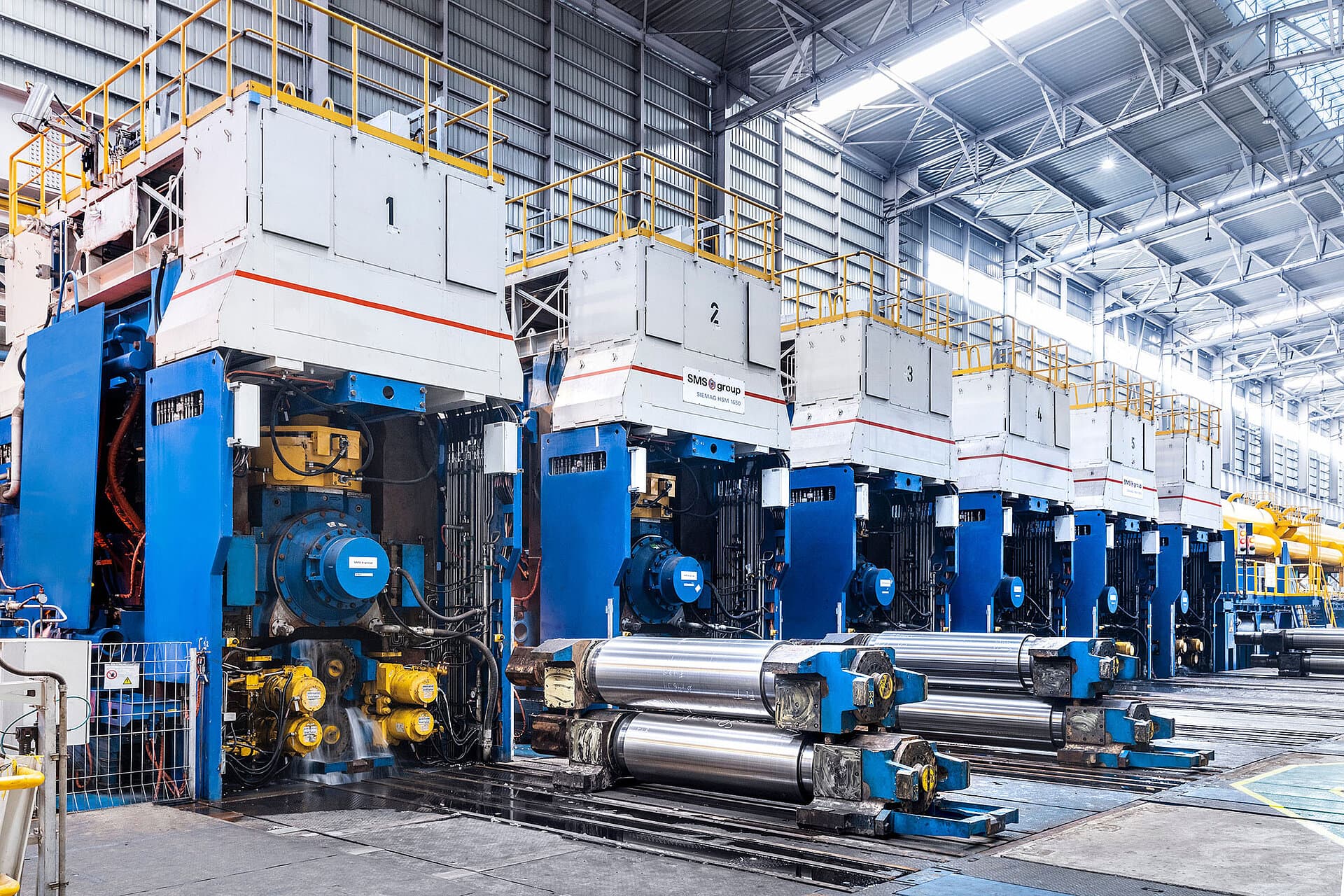
▲The PT KP 1,850 mm hot rolling line in Indonesia
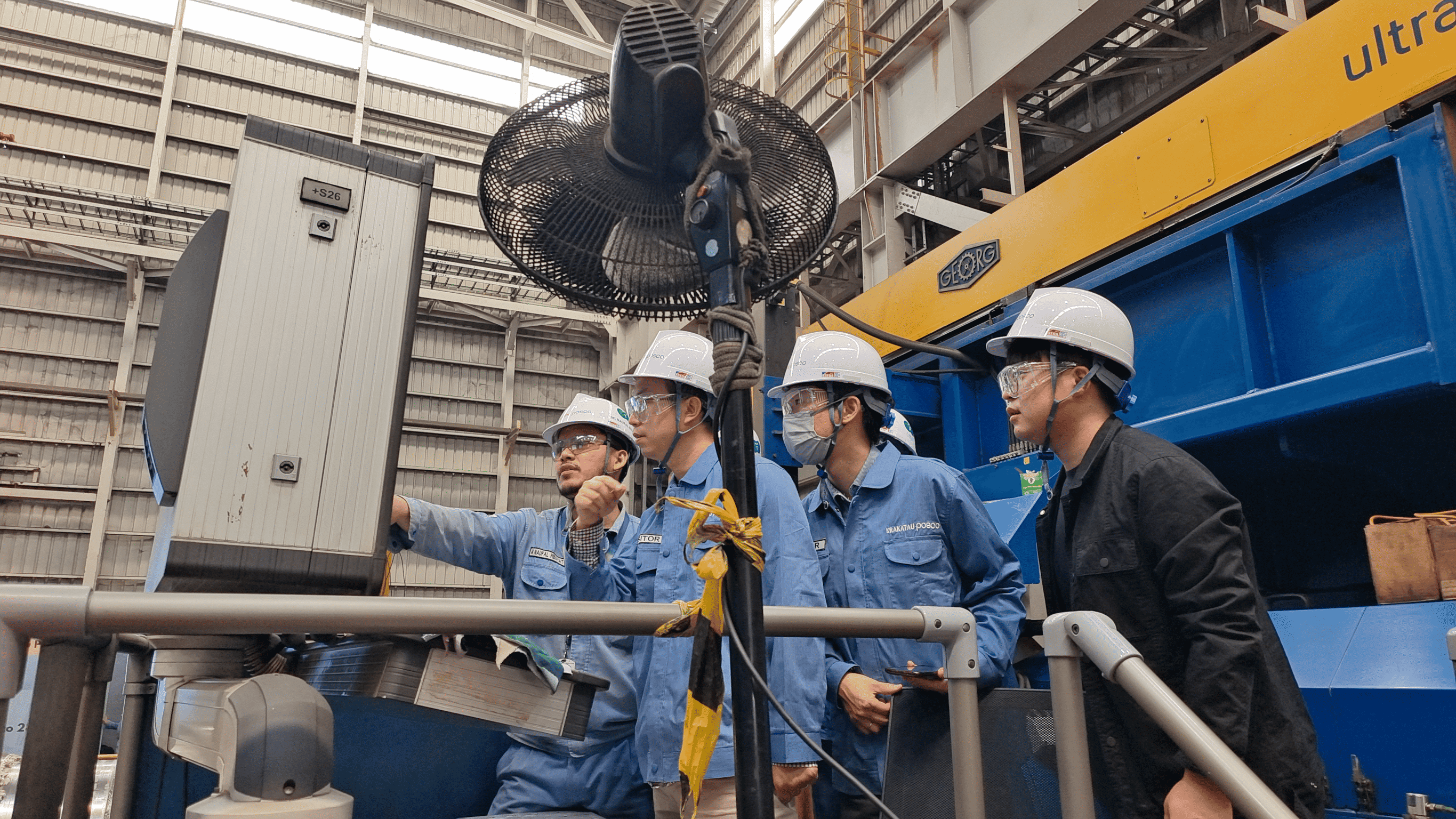
▲On-site strip shape control retrofit at the PT KP 1,850 mm hot rolling line
IV. GCNS Hot Rolling: A Digital Brain for the Whole Plant
Strip shape control solves one critical link; a digital hot rolling plant must run the whole works. At the GCNS hot rolling site in Indonesia, IET,USTB acted as general contractor for a digital factory project, with the centralized control system at its core and the hot strip line as its backbone. Automation upgrades, machine-vision AI, optimized shear cutting, intelligent combustion in the reheating furnace, digital twins, and safety and environmental management were all brought into the same production flow.
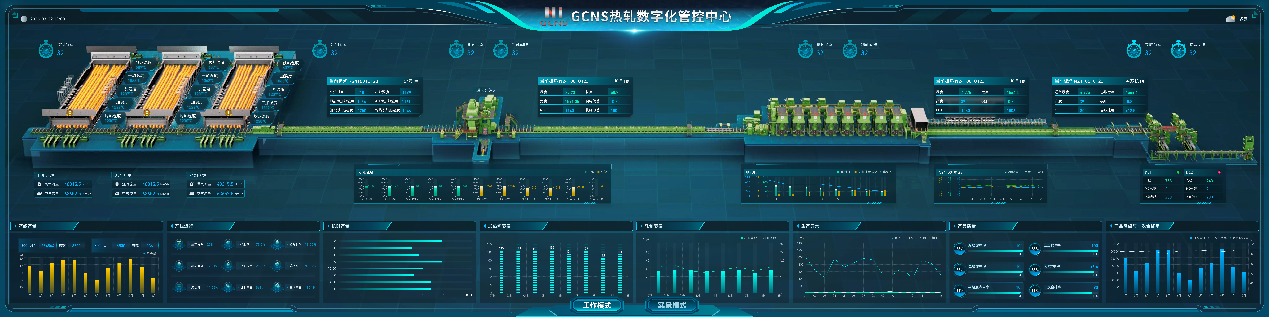
▲Digital twin interface of the GCNS hot rolling digital control center
▲IET,USTB and GCNS jointly build the 1,780 mm hot rolling digital factory
Once in service, the central control room became the plant's nerve center, coordinating production units and smoothing workflows. More operations are automated, fewer staff need to enter hazardous gas or machinery areas, manual workload has fallen, and there is room to train multi-skilled workers and optimize staffing.
Finer changes are happening in management too. Equipment condition is monitored in real time, with timely warnings for anomalies. Energy and cost are accounted for coil by coil: how much electricity and gas a coil consumed and what it cost. Quality data is analyzed on the fly, and production data flows end to end. What once relied on experience and logbooks now runs on data.
The project earned GCNS's recognition and provides a reference for the next digital factory at GCDMR. Showing the model can be repeated within the same park is more persuasive than a one-off demonstration. Production is shifting from experience- and labor-driven to data-driven, and the plant is steadily building its ability to sense, analyze and decide.
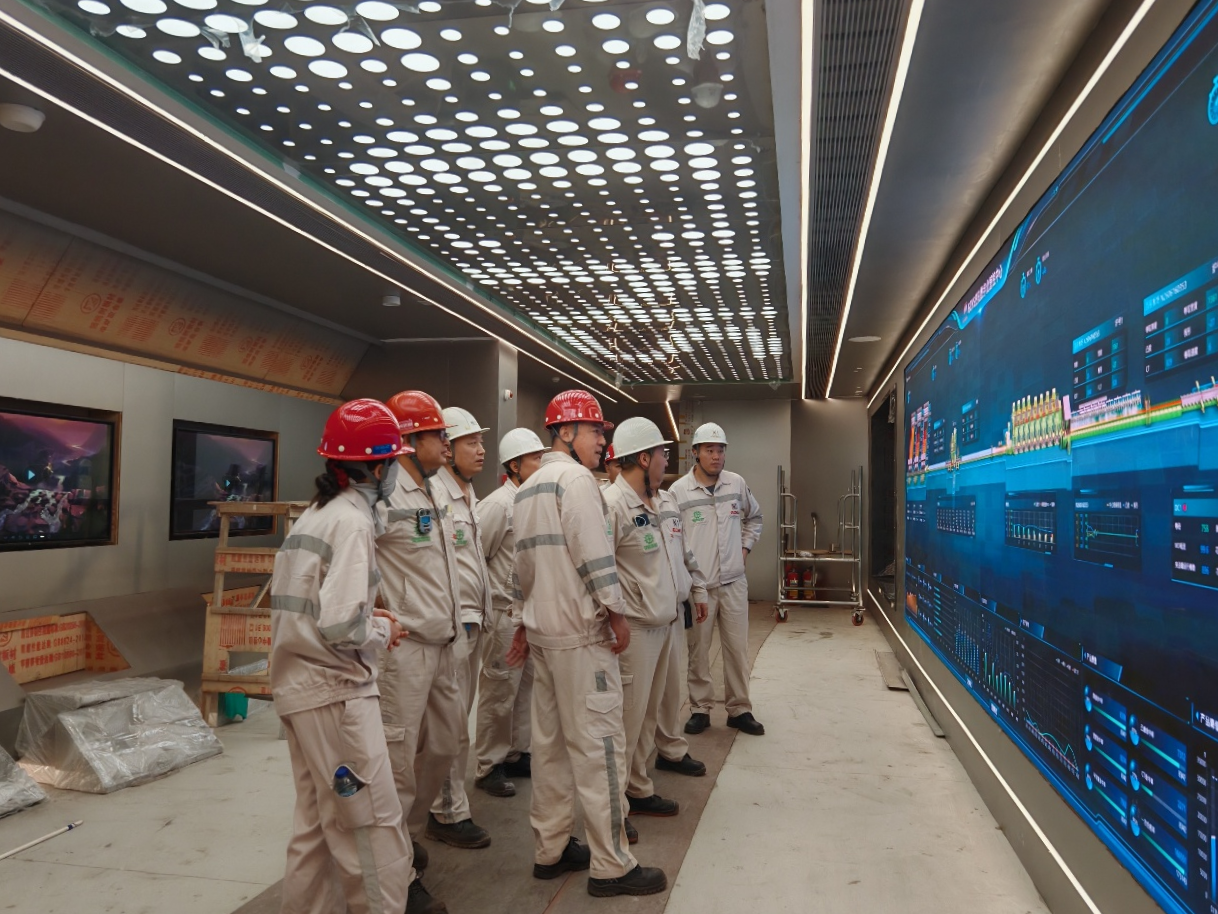
▲The GCNS 1,780 mm hot rolling digital factory in Indonesia
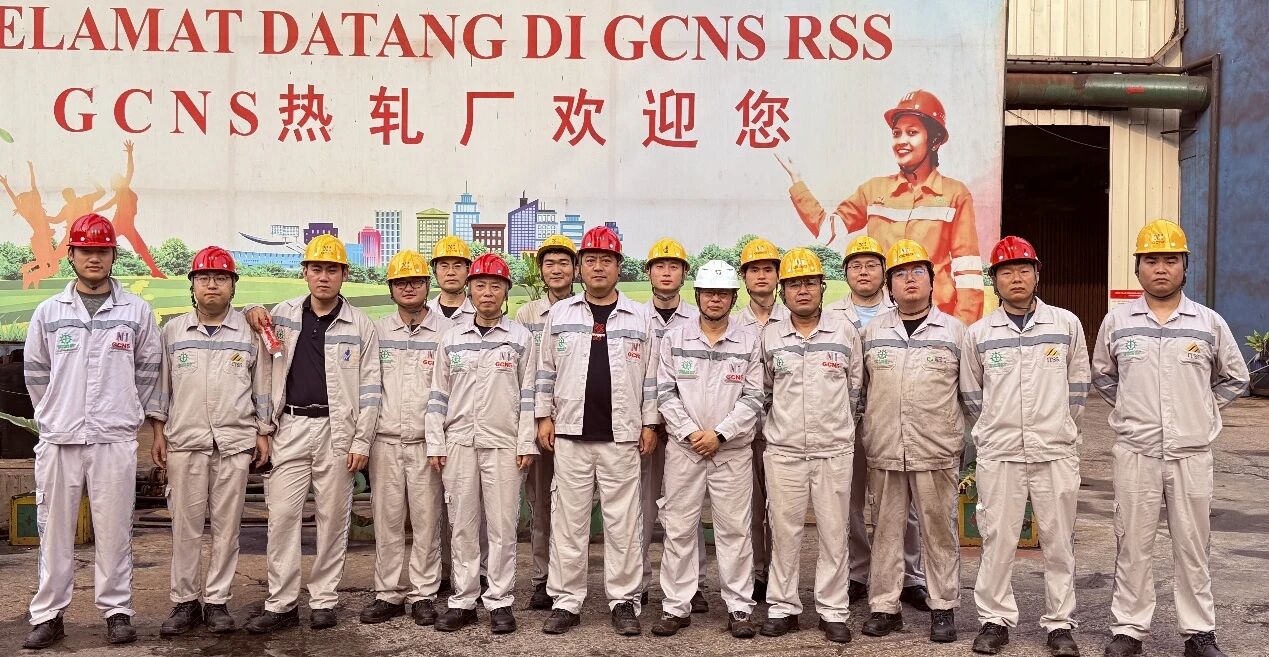
▲IET,USTB project team at the GCNS 1,780 mm hot rolling digital factory
From a park-wide digital twin platform and continuous advances in efficient rolling, to a homegrown strip shape system breaking through overseas and a hot rolling digital factory speeding up intelligent transformation, USTB has stayed on the front line of the steel industry. It takes research findings to the production floor for testing and drives technological iteration through engineering practice.
As Belt and Road cooperation enters a new phase, the University of Science and Technology Beijing (USTB) will let industrial demand guide innovation, accelerate the translation of research into real-world applications, and put more homegrown core technologies to the test in industrial settings worldwide. More Chinese solutions will empower industries along the Belt and Road, opening a new chapter in China's metallurgical innovation and engineering practice.


官方公众号


